
A Visual Guide to CBM Calculation
Learn how to calculate CBM (cubic meters) with clear diagrams — the L × W × H formula, unit conversion, and how to total multiple cartons for a shipment.
Independent developer based in Surat, India with a background in logistics software. Writes the CBM Checker guides and maintains every calculator on the site.
CBM — Cubic Meter — is the single most important number on any ocean or air freight quote. It tells the carrier how much space your cargo will occupy, and it's how forwarders bill you for LCL shipments. The math is simple, but importers still get it wrong because of unit mismatches and forgetting to multiply by the carton count. This visual guide walks through it the right way.
1. The core formula
Every CBM calculation starts with one carton and three measurements: Length, Width, and Height. Multiply them together and you have the volume of that carton in cubic meters — provided every measurement is in meters first.
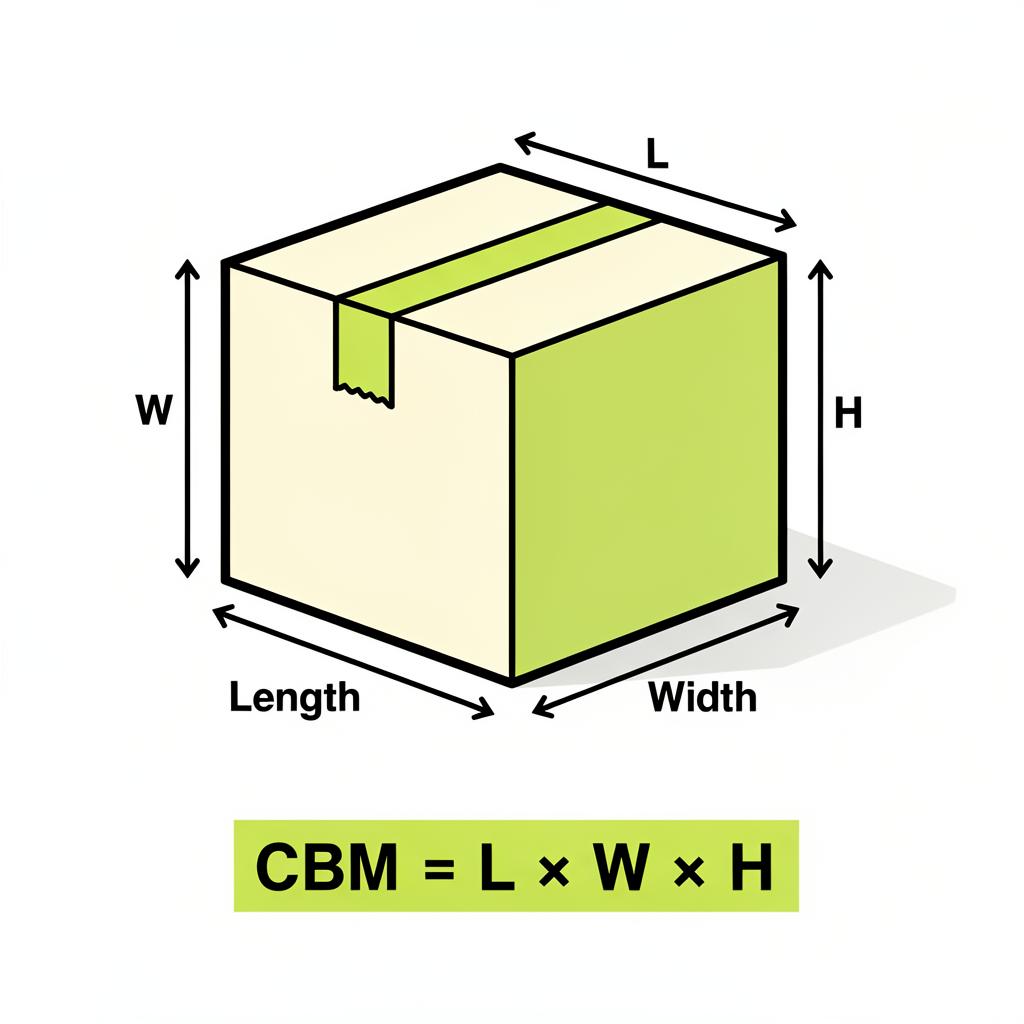
Example: a carton measuring 0.6 m × 0.4 m × 0.5 m has a CBM of 0.6 × 0.4 × 0.5 = 0.12 CBM.
2. Convert units before you multiply
90% of CBM mistakes are unit mistakes. Suppliers in China usually quote in centimeters, US warehouses in inches, and European freight quotes in meters. Convert everything to meters before you apply the formula.
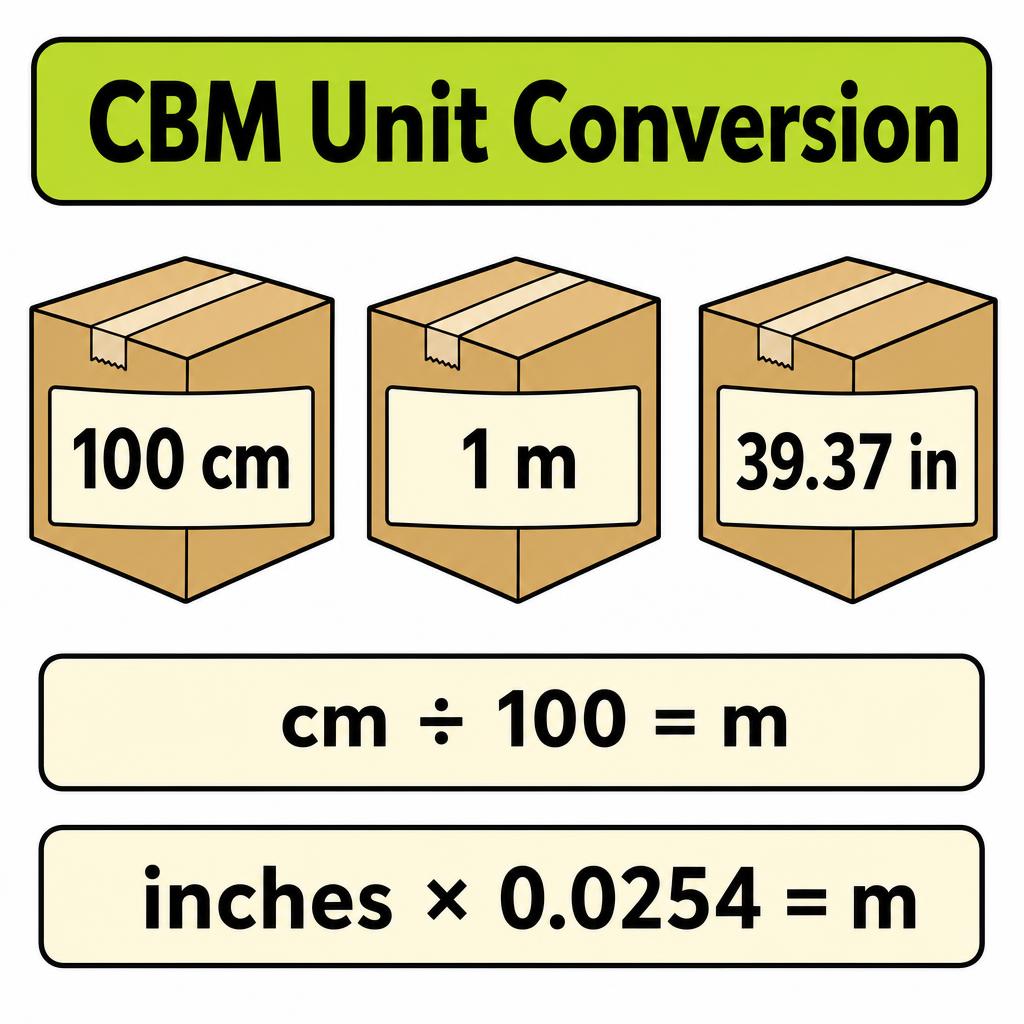
- Centimeters → meters: divide by 100. (60 cm ÷ 100 = 0.6 m)
- Inches → meters: multiply by 0.0254. (24 in × 0.0254 = 0.6096 m)
- Feet → meters: multiply by 0.3048.
If you don't want to do the math by hand, the Shipping Unit Converter handles every direction in one click.
3. Multiply by the number of cartons
A single carton's CBM is almost never what the forwarder needs. They need the total shipment volume — single carton CBM × total carton count.
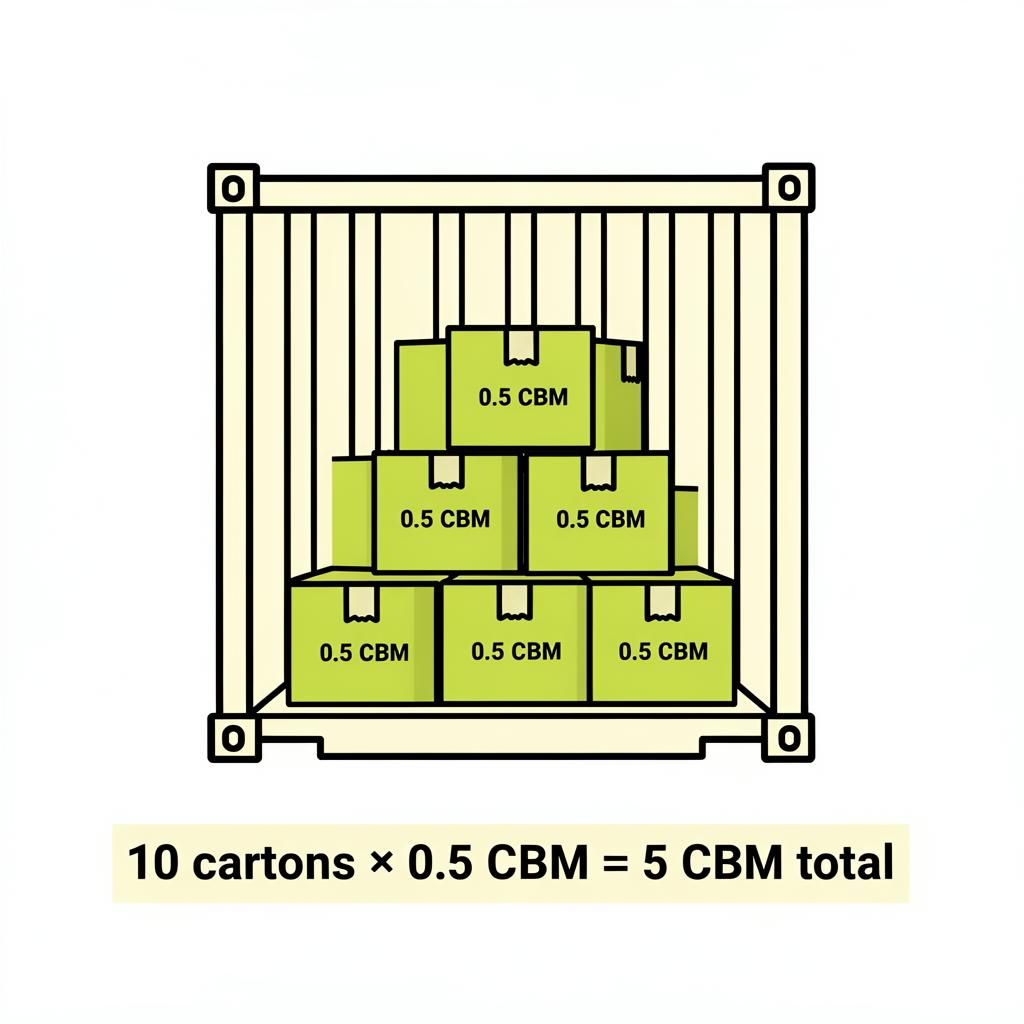
Example: 10 cartons of 0.5 CBM each = 5 CBM total. If your shipment has multiple SKUs in different carton sizes, calculate each SKU separately and sum the results.
Worked example, end-to-end
- SKU A: 50 cartons at 55 × 40 × 30 cm = 50 × (0.55 × 0.40 × 0.30) = 3.30 CBM
- SKU B: 30 cartons at 60 × 45 × 35 cm = 30 × (0.60 × 0.45 × 0.35) = 2.835 CBM
- Shipment total: 6.135 CBM — below the typical 15 CBM LCL/FCL breakeven, so LCL wins.
4. When CBM isn't the chargeable number
For air freight, carriers compare actual weight against volumetric weight and bill on whichever is higher. The IATA divisor is 6000 (cm³ ÷ 6000 = volumetric kg). For light bulky cargo — pillows, lampshades, foam — volumetric weight almost always wins, so CBM alone understates cost.
Use the Volumetric Weight Calculator to see your chargeable weight before booking air.
5. From CBM to container choice
Once you have a total CBM, container choice is mostly arithmetic. Standard usable capacities (loadable, not theoretical) are roughly:
- 20ft: ~28 CBM loadable
- 40ft: ~58 CBM loadable
- 40HC: ~68 CBM loadable
Drop your numbers into the Container Capacity Calculator and it picks the right box for you.
Frequently Asked Questions
What is 1 CBM in cubic feet?
Do I round CBM up or down on a freight quote?
Should I use the outer or inner carton dimensions?
What if my cartons are different sizes?
Calculate your shipment in seconds
Try the free CBM Calculator — no signup, instant container fit.
Open the CBM Calculator →About the author
Rohan Patel
Founder, CBM Checker
Rohan founded CBM Checker in 2024 after years of building internal tools for freight forwarders and e-commerce importers. He writes the calculators, the guides and the math behind them — and answers every contact form himself. Reach him at support@cbmchecker.com.
Have feedback on this article? Email support@cbmchecker.com or use the contact form.
/blog/visual-guide-to-cbm-calculation